More About Regenerative Medicine For Multiple Sclerosis
Table of ContentsEverything about Regenerative Medicine For Multiple SclerosisThe Single Strategy To Use For Regenerative Medicine For Multiple Sclerosis9 Easy Facts About Regenerative Medicine For Multiple Sclerosis ExplainedWhat Does Regenerative Medicine For Multiple Sclerosis Mean?Rumored Buzz on Regenerative Medicine For Multiple SclerosisThe smart Trick of Regenerative Medicine For Multiple Sclerosis That Nobody is Talking AboutOur Regenerative Medicine For Multiple Sclerosis Ideas
The mesenchymal stem cells hair transplanted throughout stem cell therapy can separate and grow to create new cells that can replace the damaged cells of the worried tissue. This may bring back neurological features in patients with this condition. These benefits of stem cell therapy are additional supported by the capability of MSCs to promote recovery.Clients with several sclerosis are generally treated with mesenchymal stem cells. These are multipotent stem cells that have the capacity to set apart and develop to develop a vast array of cell enters the body. Once hair transplanted, these stem cells can develop to develop healthy and balanced afferent neuron thus sustaining the regeneration of the damaged tissues of the nerve system.
As soon as transplanted, the stem cells migrate to areas of inflammation or damage within the main nervous system (CNS). They are naturally brought in to the sites of injury where the immune system is assaulting the myelin sheath, the protective covering of nerve fibers. The stem cells function by promoting the fixing and regrowth of damaged myelin, potentially bring back function to affected afferent neuron.
Not known Details About Regenerative Medicine For Multiple Sclerosis
Stem Cell Research Study on MS The National Multiple Sclerosis Culture, along with other companies, is proactively funding and sustaining research study into mesenchymal stem cell therapy for several sclerosis to explore their possible and improve therapy procedures. The objective is to establish much safer and more effective methods to utilize stem cells in treating MS.
3 Simple Techniques For Regenerative Medicine For Multiple Sclerosis
Here are below from testimonials of people Swiss Medica clinic. The person took a trip from Romania seeking treatment for MS after hearing positive responses regarding stem cell therapy for the disease.
Obtain a free online assessment to find out just how stem cells will certainly help your case, and what are the duration and expense of the therapy. Clinical Expert, Swiss Medica medical professional Lemus, H. N., Warrington, A. E., & Rodriguez, M. (2018 ). Several Sclerosis: Devices of Disease and Strategies for Myelin and Axonal Repair.
The Best Strategy To Use For Regenerative Medicine For Multiple Sclerosis
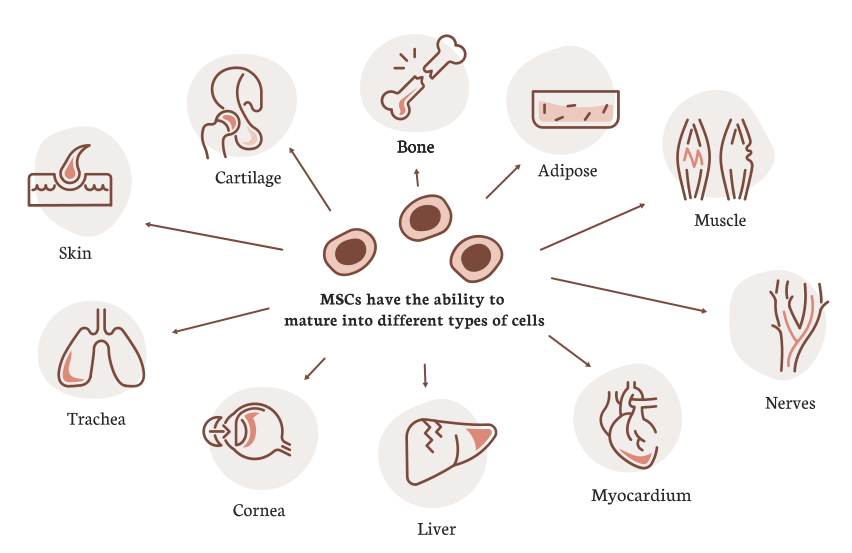
Stem cells are cells in the body that can grow into specialized cells that offer a particular feature. They are also able to produce precise copies of themselves. There are 2 major types of stem cells: embryonic stem cells and grown-up stem cells. are located in the developing embryo and can grow right into most kinds of cells in the body.
are located in some grown-up tissues and body organs consisting of the bone marrow, skin, blood, and mind. Adult stem cells are not as adaptable as embryonic stem cells and are consequently extra restricted in regards to the sorts of cells they mature right into. The distinct residential or commercial properties of stem cells provide pledge for new treatments that can slow/halt MS condition task and visit this website fixing tissue damages in the central nerve system.
The Greatest Guide To Regenerative Medicine For Multiple Sclerosis

The procedure entails accumulating stem cells from an individual's own (autologous) bone marrow. The person is then treated with radiation treatment to diminish the immune system and stem cells are reestablished into the body where they mature into new, healthy and balanced immune cells - Regenerative Medicine for Multiple Sclerosis. Stem cells can be injected right into the body in different means
In 2000, the MS Society of Canada and MS Scientific Study Structure moneyed a professional trial involving HSC transplants, led by Drs. Mark Freedman and Harry Atkins from the Ottawa Health Center Research Institute/University of Ottawa. The aHSC treatment navigate to these guys available in Canada is a therapy that uses high-dose chemotherapy, additionally called conditioning.
Regenerative Medicine For Multiple Sclerosis - Truths
Neural stem cells (NSC) are discovered in the mind and can develop right into numerous sorts of brain cells including neurons, oligodendrocytes, and astrocytes. NSCs may offer to repair or safeguard the brain and modulate the body immune system. Early scientific tests in non-human primates showed that therapy with NSCs benefitted the development of MS-like illness in animal designs.
The results from these security studies are positive for future stem cell and regenerative medication therapies in MS. Future medical trials (stage 2 and 3) with larger varieties of individuals and controls are essential to assess the effectiveness of this treatment for MS. As shown by the instances above, there is a large range of research study taking area that will provide additional answers about the use click for more of stem cells to treat MS.
Stem cell therapy is thought about risk-free, yet, like any type of medical treatment, it carries some risks, such as temporary swelling or discomfort at the injection site. Serious side results are unusual when carried out by qualified experts.
What Does Regenerative Medicine For Multiple Sclerosis Do?
Multiple sclerosis (MS) is a chronic illness of the main anxious system that impacts the brain and back cable. It is characterized by the deterioration of myelin, a substance that covers nerve fibers, bring about disruptions in interaction between the mind and the remainder of the body. Symptoms can vary widely and include muscle weakness, vision issues, discrepancy, and tiredness.
Numerous sclerosis is defined by the immune system mistakenly assaulting the protective sheath (myelin) that covers nerve fibers, triggering communication concerns between the brain and the remainder of the body. The illness can result in the wear and tear or irreversible damage of nerves. Symptoms vary widely amongst individuals and can consist of tiredness, wheelchair problems, discomfort, and cognitive modifications.